

Summary
The autism diagnosis debate distracts from the real issue: autistic and neurodivergent people need person-centred support before crisis, not after.
There’s a debate happening across the media right now, and it’s pulling our attention in the wrong direction. The headlines seem to want us fighting over what “really” counts as autism. Who fits the label. Who doesn’t. What autism should look like.
Meanwhile, the thing that actually matters is slipping quietly out of view.
Here’s the truth: autistic people are not getting the support they need.
That’s the real story.
That’s the scandal worth talking about.
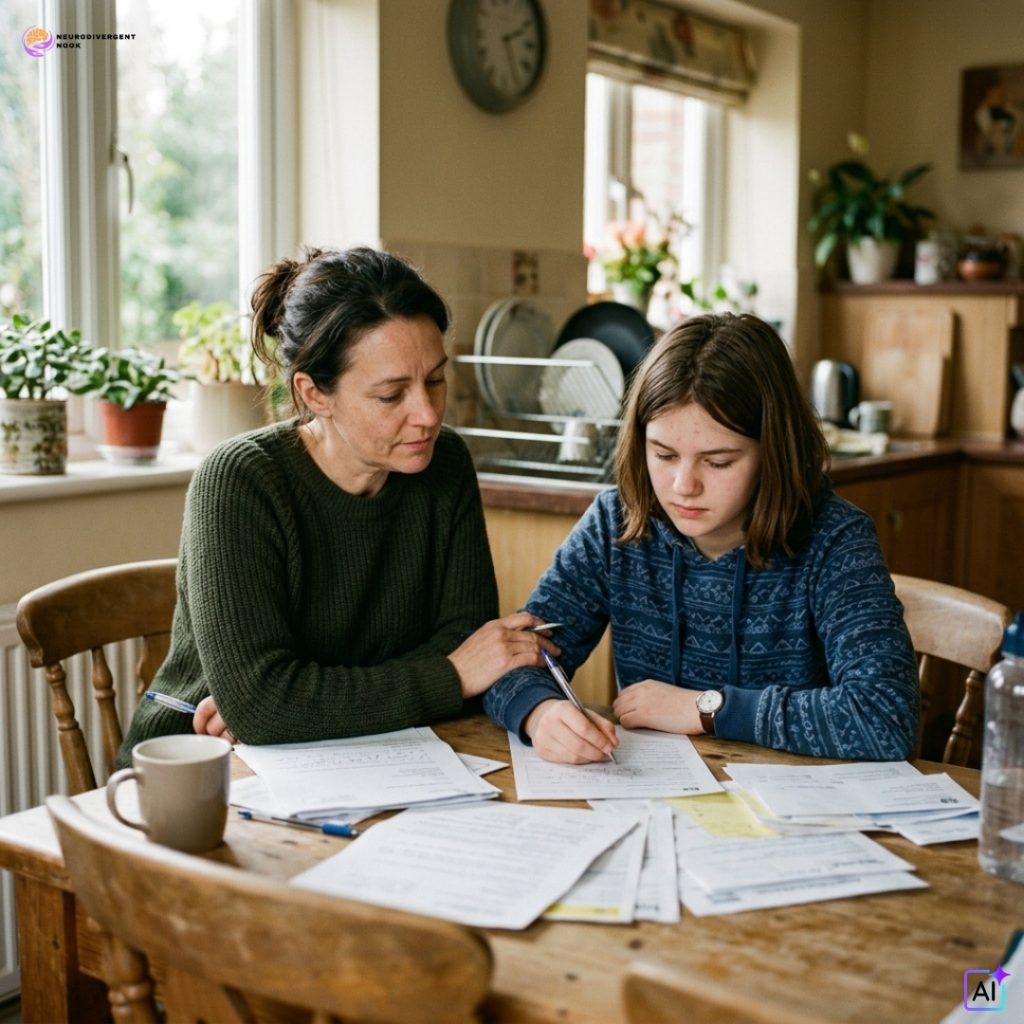
The Distraction We Keep Falling For: And I Know because I’ve Done it Too
It’s easy to get swept up in the arguments. The definitions. The scientific back-and-forth over where the boundaries of autism sit. But while we’re busy debating words, families are left waiting for help that never seems to arrive.
Think about what these debates achieve:
- They shift focus away from real, urgent needs,
- They pit members of the same community against one another,
- They give the impression that “sorting out the label” is the goal, and
- They seem to be letting the very systems failing autistic people off the hook.
And it isn’t just autistic people. Often, it’s neurodivergence across the whole the umbrella.
The conversation feels important. And it is important that we get the diagnostic criteria in the DSM right. That is not what we are debating here.
It isn’t the most important thing within the autistic community at the moment though.
What IS the most important, is that we need truly person-centred care, that is looking at the needs of autistic people, and beyond this, neurodivergent people that are being supported, and supporting those needs.
Not the needs that we think they must have because they are autistic, or ADHD, or schizophrenic, or PDA, and so on. Truly individualised care, so that we aren’t ticking boxes, or trying to squeeze people into categories that they don’t quite fit. Or even that we have bias about, and so we feel they ought to be supported in one particular way rather than another.
It feels like progress when we debate these categories.
Too often though, it’s simply noise that keeps us from the work that genuinely helps.
There’s Nothing Wrong With the Label
Let’s be clear about this. The autistic label is not the problem.
Whether someone is autistic with a learning disability or autistic without one, whether their needs look one way or another, the word itself does no harm. It does give people and their carers a language for their experiences. It connects them to a community. It opens doors to understanding.
The label isn’t broken. The system around it is.
There is a move to create the new profound autism label, and advocates continue to want to do this, typically for their children, who don’t have the privilege of being able to advocate for themselves.
If this is important to them, it isn’t something I’m going to argue with.
What I will continue to argue about is that this is NOT the most important thing.
The most important thing is to get the support to all autistic people, profound or not, when it is needed, as it is needed, and before it is too late.
People are dying.
Autistic individuals are three to nine times more likely to die by suicide.
The Real Scandal: Support That Comes Too Late
That means that is it here where our energy belongs. Right now, far too many autistic people only receive help once they’ve reached crisis point.
That’s not care. That’s a system waiting for things to fall apart before it steps in.
Consider what this looks like in practice. I see these failings in my own work, as well as in my personal life, with both children and adults in a mental health system that seems not to be fit for purpose:
- Long waiting lists that stretch on for months or years across multiple diagnostic categories,
- Support that arrives only after breakdown, rather than preventing it,
- Families forced to fight for every bit of help they get, particularly within the education system where we seem to be wanting families to give up on their EHCPs as a way to not have to put them in place (!), and
- People let down repeatedly by services meant to catch them before they hit crisis.
When support only appears in an emergency, we’ve not done what we need to be doing for autistic and neurodivergent people.
We have failed them. Prevention should never be an afterthought. Early, steady help changes lives, and it’s exactly what’s missing.

Where We Should Put Our Energy
If we want real change, we need to shift the conversation. Away from who belongs inside the label, and towards making sure everyone inside it is genuinely supported.
Here’s how we can help move things in the right direction:
- Redirect the conversation. When debates about definitions come up, maybe we can gently steer them back to support and access. Uta, are you listening here?
- Amplify voices that focus on solutions. Share the people and organisations pushing for better systems.
- Champion early support. Back services and policies that step in before crisis, not after.
- Hold systems accountable. Ask why help arrives so late, and keep asking until answers come.
- Stand together. A united community is far harder to ignore than one divided by arguments, and though they do matter, let’s shout louder about how our systems are failing us first and foremost in terms of support, and not in terms of how autism is being defined.
Let’s Fix What Actually Matters
The scientists can keep debating definitions. That’s their work, and it will carry on. But it shouldn’t distract the rest of us from the change that’s long overdue.
In an ideal world, we wouldn’t need the labels. We would look at every individual and see what supports they needed the most, and put that in place.
We do not live in this ideal world, and we have the labels, so let’s work with them in the best way we can to help those that need support, acceptance and understanding.
So here’s my question instead:
What would change if we stopped arguing about the word, and started fixing the systems?

Let’s put our energy into that, Uta, and everyone else who is, often, non-autistic, and asking those questions.
How about the money that was recently given to Cambridge is used for that, and not only this, listens to autistic people about how that money needs to be used?
Maybe even based on the research that Autistica did about this relatively recently, which I was involved with?
Let’s find out together. Put your energy where it counts. Speak up for support that comes early, not late. Because no one should have to reach breaking point before someone finally helps.
That’s the change that we hope is worth fighting for.
Leave a Reply